
What procurement teams actually want (and what they don't)
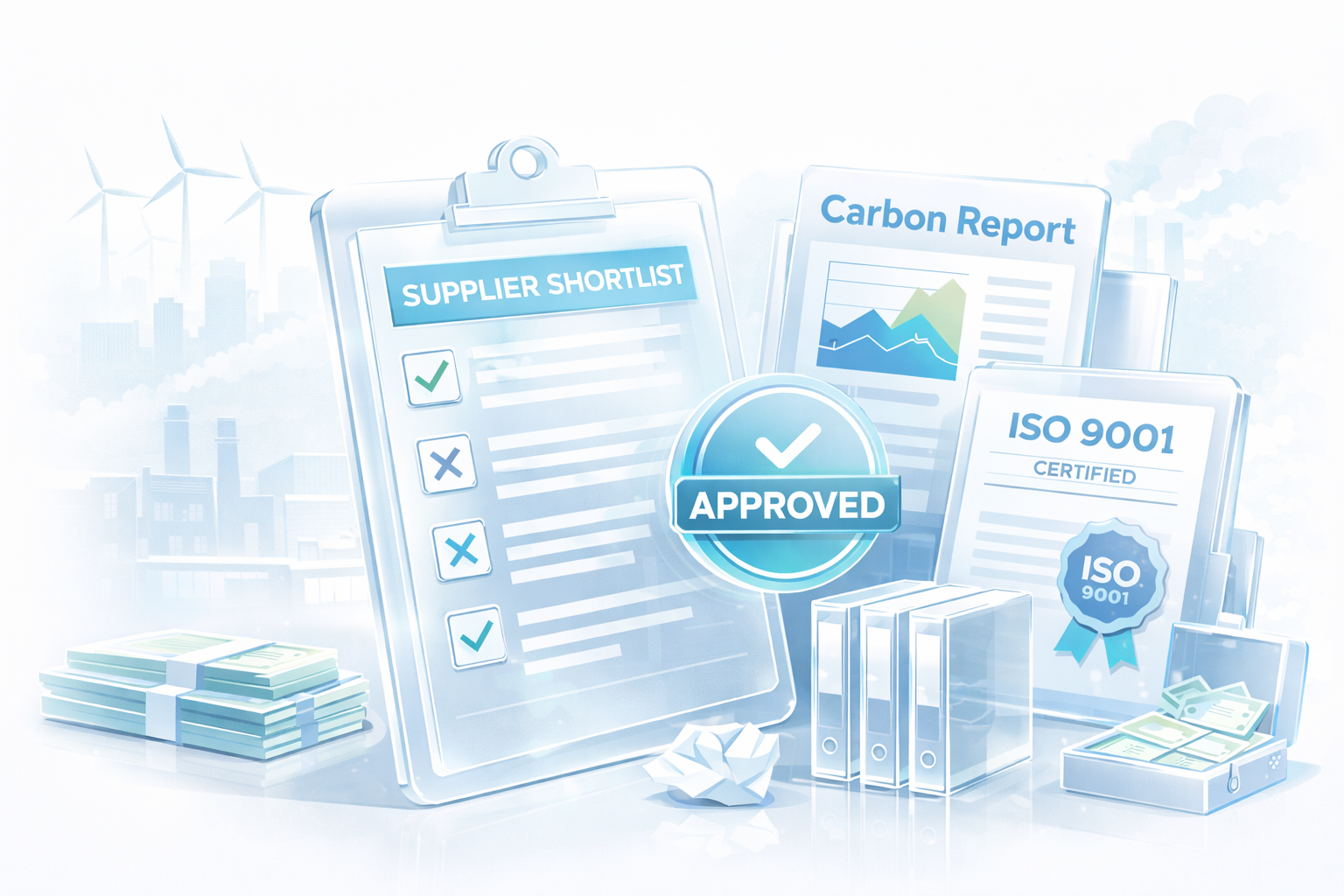
We've sat on both sides of this table, as a supplier being asked for carbon data, and as advisors helping procurement teams evaluate submissions. That dual perspective has taught us something important: there's often a massive gap between what suppliers think procurement wants and what they actually need.
Understanding this gap can save you significant time and help you focus your efforts where they'll actually make a difference.
The uncomfortable truth
Here's something many suppliers don't realise: most procurement teams are learning this as they go. Outside of major corporations with dedicated sustainability functions, the person evaluating your carbon data is often a procurement officer who's been handed sustainability responsibilities on top of their existing role.
They're not carbon experts. They're trying to implement their organisation's sustainability policy, meet regulatory requirements, and report upwards to senior management – often without specialist training. This context matters because it shapes what they're actually looking for.
What they actually need
The essentials
- ✓ A number they can use in their own Scope 3 reporting
- ✓ Consistency year-on-year for tracking progress
- ✓ Evidence of methodology for audit purposes
- ✓ A contact for follow-up questions
A number they can use
At its most basic, procurement teams need a figure they can plug into their own reporting. When a large organisation reports their Scope 3 emissions, they need to account for their supply chain. Your emissions data becomes their data.
The most useful format is emissions intensity – for example, kg CO2e per £1,000 of goods supplied, or per unit of product. This allows them to scale your emissions to match their purchasing volume. If you only provide a total figure, they'll have to calculate this themselves (or estimate it, which is less accurate for you).
Consistency year-on-year
Procurement teams are increasingly required to show progress. That means they need to compare your data from this year to last year and the year before. If your methodology keeps changing, or you report different scopes each year, tracking becomes impossible.
The implication: Decide on your methodology and stick with it. It's better to have a consistent, comparable dataset than to switch approaches every year in pursuit of a "better" number.
Evidence of methodology
When procurement teams present their carbon data to auditors or senior management, they need to be able to explain where the numbers came from. "Our supplier told us" isn't good enough – they need to reference a standard.
This is why stating "calculated in accordance with the GHG Protocol" or "following ISO 14064" matters so much. It's not bureaucracy; it's audit protection. And it makes their job easier.
A contact for follow-up questions
This is often overlooked. Procurement teams frequently have clarifying questions, and they need someone who can answer them. Include a named contact with your submission – ideally someone who understands the data and can respond within a few days.
What they don't need
Common time-wasters
- ✗ Perfect data (good enough beats nothing)
- ✗ Marketing copy about your green initiatives
- ✗ Lengthy explanations (save for questions)
- ✗ Third-party certification (nice to have, not essential)
Perfect data
Many suppliers delay responding because they want their data to be perfect. This is counterproductive. An estimate submitted on time is far more useful than precise data submitted late or not at all.
Procurement teams expect data quality to improve over time. What they're looking for in year one is evidence that you're measuring and engaging with the process. You can refine your methodology later.
Marketing copy
We've reviewed submissions that include pages of corporate sustainability messaging: vision statements, values, and vague commitments. This isn't what evaluators are scoring. It often comes across as padding to disguise a lack of substance.
Keep your response focused on the data they requested. If there's space for narrative, use it to explain your methodology or reduction plans – not general corporate messaging.
Lengthy explanations
Evaluators are reviewing multiple submissions. Long-winded explanations slow them down and can obscure your actual data. Present your figures clearly, provide essential context, and leave detailed explanations for follow-up conversations if needed.
Third-party certification
While ISO 14001 certification or third-party verified footprints are valuable differentiators, they're rarely mandatory. Most procurement teams understand that verification adds cost and complexity, especially for smaller suppliers. Having it is good; not having it isn't disqualifying.
The format question
Suppliers often ask: "What format should I use?" The honest answer is: whatever they ask for. But if there's flexibility, here's what works best:
- CDP – If you're asked to complete a CDP questionnaire, do it. Many large buyers use CDP scores directly in their supplier assessments
- Spreadsheet – A clear Excel template with your emissions by scope, methodology notes, and contact details is often the most practical format for ad-hoc requests
- PDF report – Good for formal submissions, but make sure the data is extractable (not just a screenshot of numbers)
How scoring typically works
While every organisation has its own approach, most sustainability scoring in tenders follows a similar pattern:
- Weighted section – Sustainability typically counts for 10-20% of the total tender score
- Sub-criteria – Within that section, carbon data might be one of several elements, alongside environmental management systems, social value, and circular economy initiatives
- Evidence-based scoring – Responses are scored against predefined criteria, usually on a 0-5 scale where 0 = no response and 5 = exceeds requirements with innovation
Understanding this helps you calibrate your effort. A perfectly polished carbon report won't win the bid alone, but a weak or missing response can definitely lose it.
Building the relationship
The best supplier-buyer relationships on sustainability go beyond compliance. Once you've established a baseline of good data exchange, there are opportunities to collaborate on reduction initiatives.
Some buyers actively support suppliers with carbon measurement through training programmes or shared tools. Others invite key suppliers to participate in Science Based Target development. These opportunities typically go to suppliers who've demonstrated engagement and capability.
The first step is always getting your data house in order. If you're ready to move from reactive responses to proactive engagement, our sustainability experts can help you develop a strategy.
What the future looks like
Everything we've seen over 5 years points in one direction: these requirements will increase. Regulatory pressure ( CSRD, CBAM, SEC disclosure rules) is pushing large companies to report more comprehensively, which cascades to their supply chains. In the UK, the UK Sustainability Reporting Standards (UK SRS) will make Scope 3 disclosure mandatory for listed companies from 2028, further increasing demand for supplier carbon data.
The suppliers who invest now in proper carbon measurement will find future requests easier to handle. If you're wondering how long the process takes, our carbon reporting timeline guide breaks it down by company profile. Those who treat each request as an isolated inconvenience will spend more time scrambling every year.
For practical guidance on avoiding the most common pitfalls, see our companion article: Carbon reporting mistakes that lose tenders. And if a client has just asked for your data, start with what to do when a client asks for your carbon data.
Get procurement-ready with EcoHedge Express
Generate consistent, methodology-backed carbon reports that procurement teams can actually use – automatically from your accounting data.
Try EcoHedge ExpressRelated Articles
Carbon reporting mistakes that lose tenders
The errors that consistently cost businesses contracts in competitive bids.
What to do when a client asks for carbon data
The step-by-step response guide for carbon data requests.
Scope 3 explained for suppliers (without the fluff)
The practical guide to Scope 3 emissions without the jargon overload.
How long does carbon reporting actually take for a UK SME?
Realistic timelines by company size, accounting setup, and complexity.
UK Sustainability Reporting Standards: what businesses need to know in 2026
The regulatory landscape and what it means for your reporting obligations.